A touch lighter than a coin. A recalibration deeper than muscle.
CranioSacral Therapy (CST) is practised in Singapore as a precise, gentle approach to the nervous system. Your spinal cord and brain are cocooned in a continuous, fluid-filled hydraulic loop — the craniosacral system. When chronic stress or physical trauma locks the nervous system into a permanent "flight" response, this system tightens, putting an invisible brake on your entire structural movement.
CST doesn't force the system. It listens.
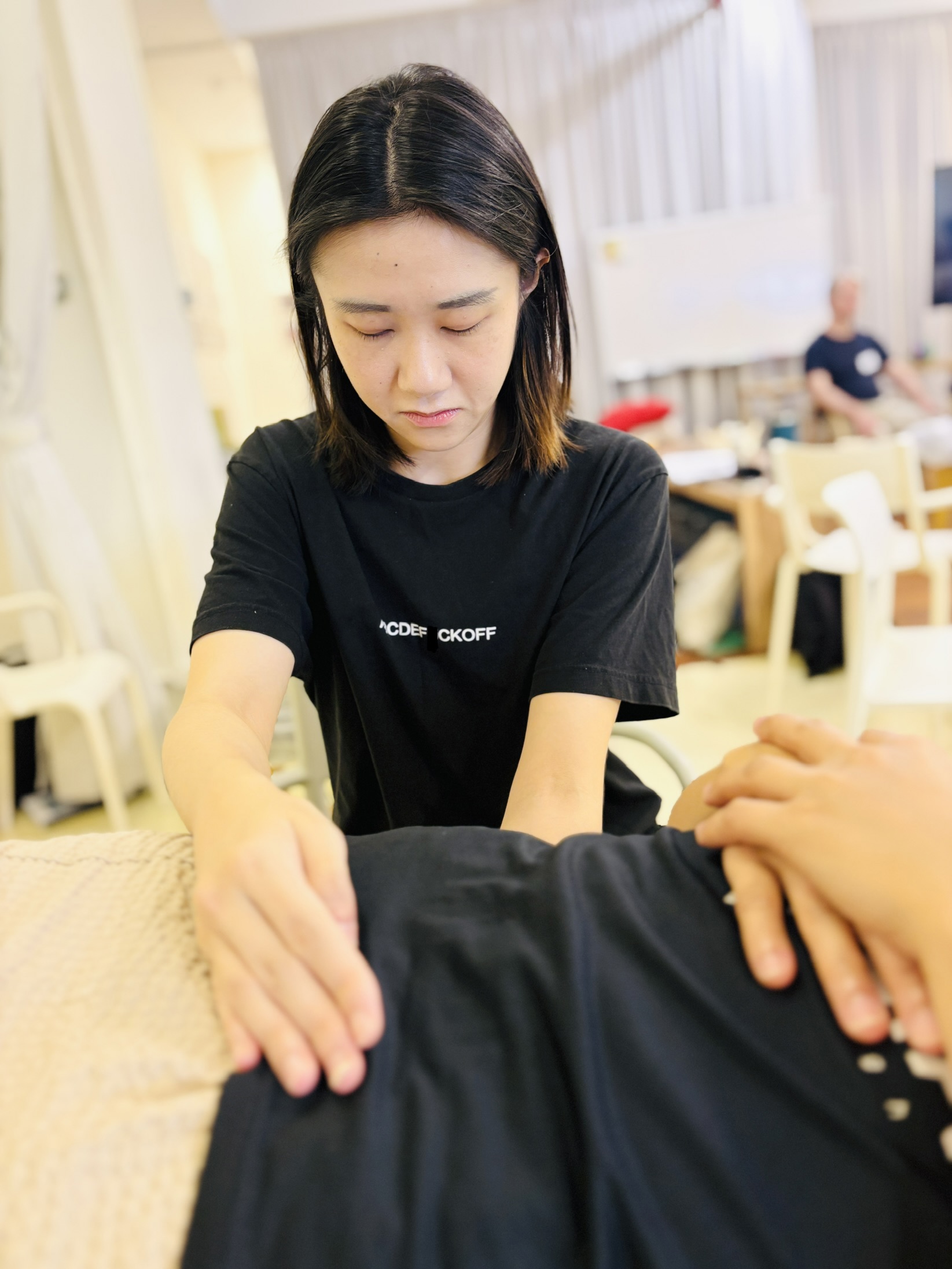
Using a touch of just 5 grams — the weight of a nickel — this work interfaces with the body's deep, subconscious rhythms to release restrictions along the spine and cranial bones. It is a precise, micro-level recalibration that drops an overworked brain back into a deep, autonomous state of rest.
When the deep craniosacral axis loses its mobility, it signals through specific, persistent patterns. This work is highly effective if your system exhibits any of the following:
Mind racing, shallow sleep, chronic fatigue — a nervous system that has forgotten how to safely down-regulate.
Waking with a tight jaw, clicking TMJ, night-time teeth grinding, or tension headaches radiating from the base of the skull.
A stubborn, deep-seated restriction in your spine, pelvis, or shoulders that standard tissue manipulation or stretching cannot unlatch.
Lingering compression, brain-fog, or structural compensation patterns following an old physical impact or intense athletic strain.
Because CST works with your nervous system rather than against it, no two sessions feel exactly alike. What stays consistent is the setting and the intention: a quiet room, an unhurried pace, and sustained attention given to where your body is holding tension. You don't need to "do" anything.
Most people notice one of a few responses:
Many simply drop into a profound, sleep-like stillness as an overworked nervous system finally down-regulates.
You may feel small shifts as restricted tissue softens — a settling of the jaw, length through the spine, a fuller breath.
Letting go of long-held physical tension often leaves a clear sense of calm and lightness in the hours afterwards.
There is no requirement to feel anything dramatic. The work is measured by how your system feels in the days that follow — steadier sleep, less clenching, more ease in a stubborn area.
50 minutes per session.
You remain fully clothed and lie comfortably on a treatment table. Nothing about the work is forceful — expect only light, sustained contact at the head, spine, and pelvis.
Most people feel a noticeable shift within one to three sessions, though this depends on the individual and what they are working through.
Plans tailored in-studio with Effy.
By appointment, in-studio in Singapore.
If you're unsure whether CST is the right fit, a short conversation before booking is always welcome.
CST is a gentle, hands-on therapy that works with the craniosacral system — the fluid-filled hydraulic loop surrounding your brain and spinal cord. Using a touch of just 5 grams, it releases restrictions along the spine and cranial bones to help an overworked nervous system return to rest.
CST is particularly effective for those experiencing chronic stress, jaw tension or TMJ issues, tension headaches, disrupted sleep, or deep-seated restrictions that stretching or massage cannot resolve. It is also helpful after old physical injuries or periods of intense physical strain. If you spend long hours at a desk under pressure, these patterns will likely sound familiar.
You remain fully clothed and lie on a treatment table. The work involves light, sustained contact at the head, spine, and pelvis. There is nothing forceful — most people experience a deep stillness, subtle physical releases, or a quieter mind. Sessions are 50 minutes.
Most people notice a meaningful shift within one to three sessions, though this varies depending on the individual and what they are working through. A short conversation before booking can help clarify what to expect for your situation.
No. CST uses a touch of approximately 5 grams — far lighter than massage — and works with the nervous system rather than the muscles directly. The effects are often felt systemically: steadier sleep, less clenching, more ease in a chronic area.
Sessions are held by appointment, at a studio in Singapore. To book or ask a question before committing, reach out via the contact section.
5 grams of touch.
A lifetime of holding, released.
Discover more about the CranioSacral Therapy approach used here, please visit The Upledger Institute →